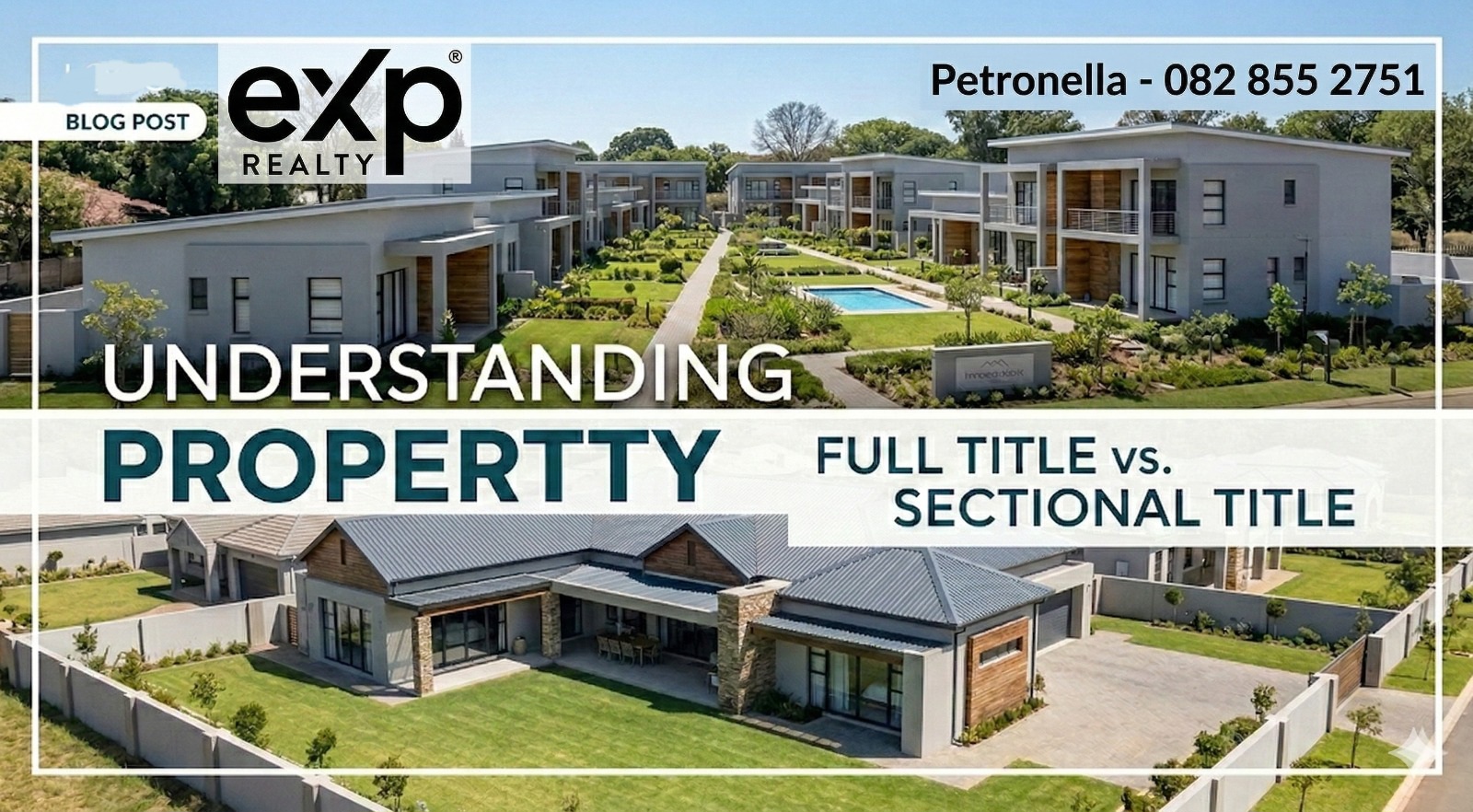
From Duets to Full Title: Decoding South African Property Types
🏠 Understanding Property Types: Which One is Right for You?
When you're looking for a new home, the terminology can be confusing. Are you buying a simplex or a duplex? Is it a sectional title or a full title? Understanding these terms is crucial as they affect your ownership rights, responsibilities, and the costs you'll incur.
Here's a breakdown of the common property types in South Africa to help you make an informed decision:
1. Simplex
A simplex is a single-story dwelling, meaning it's all on one level. These homes are typically found within a complex and offer a more compact living space, making them ideal for individuals, couples, or small families.
2. Duplex
As the name suggests, a duplex is a two-story home. It has two levels connected by an internal staircase. Duplexes are often larger than simplexes and can offer more space, making them suitable for larger families or those who need extra rooms.
3. Duet
A duet is a type of sectional title property where two independent homes share a common wall and are located on a single erf. While they share a wall, each unit typically has its own garden and entrance. Duets can offer a balance between the privacy of a freestanding home and the convenience of complex living.
4. Townhouse
Townhouse is the Afrikaans word for townhouse. In South Africa, townhouses are usually part of a complex and are attached to other units. They are often built as duplexes or simplexes and are typically owned under sectional title.
5. Sectional Title
Sectional title is a form of property ownership where you own a specific unit within a complex or development, along with an undivided share of the common property (such as the gardens, swimming pool, and club house). You will be a member of the Body Corporate, which is responsible for the management and maintenance of the common areas. You will pay monthly levies to cover these costs.
6. Full Title (Freestanding)
Full title is the traditional form of property ownership where you own the entire erf and the buildings on it. You are solely responsible for the maintenance and management of your property and do not need to pay monthly levies to a Body Corporate. This gives you more freedom but also comes with more responsibilities and potential costs.
Ultimately, the best property type for you will depend on your individual needs, budget, and lifestyle. By understanding the different options available, you can make an informed decision and find the perfect home.
Hopefully, this helps clarify the different property types for you. If you have any further questions, feel free to contact me.